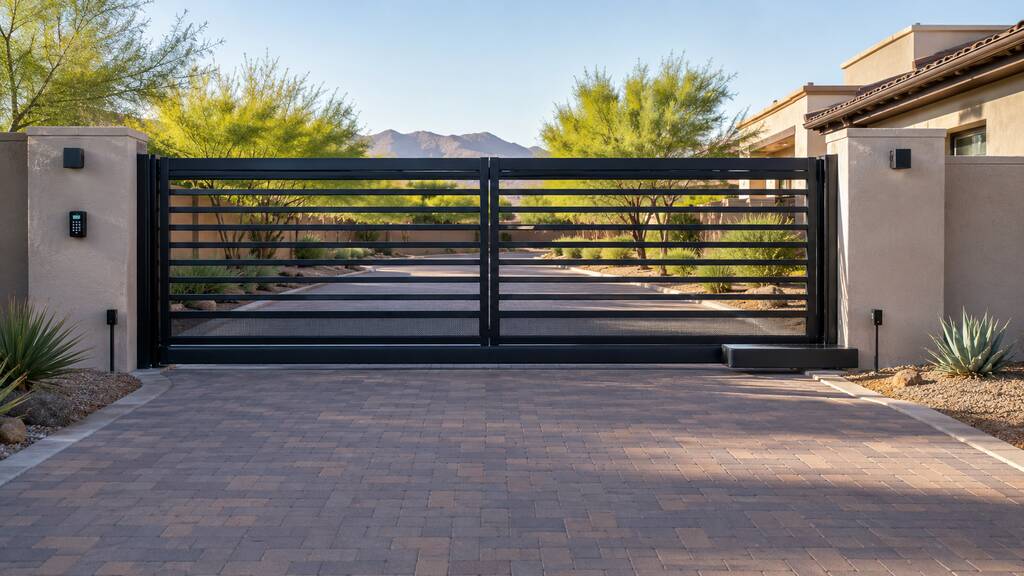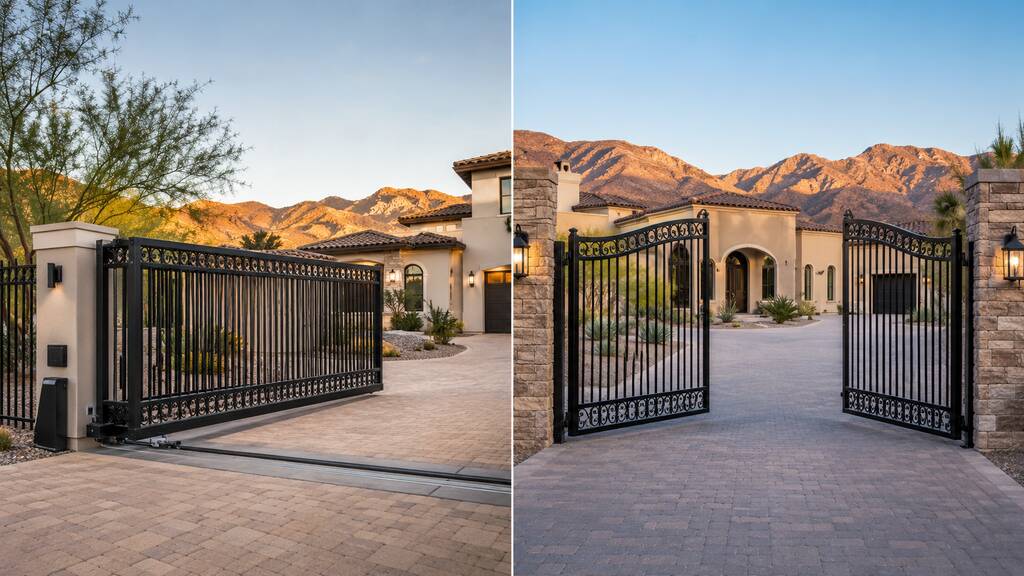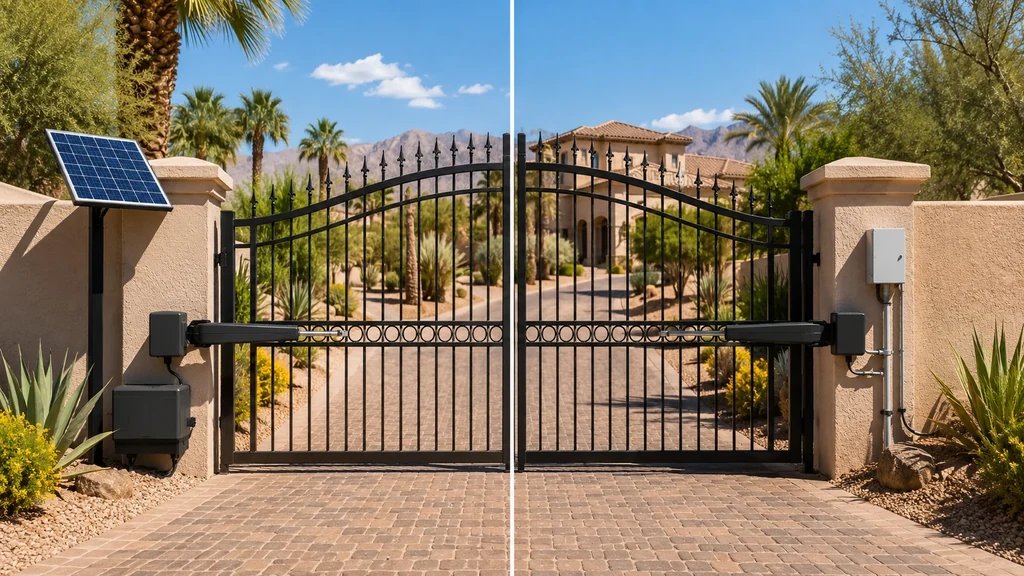
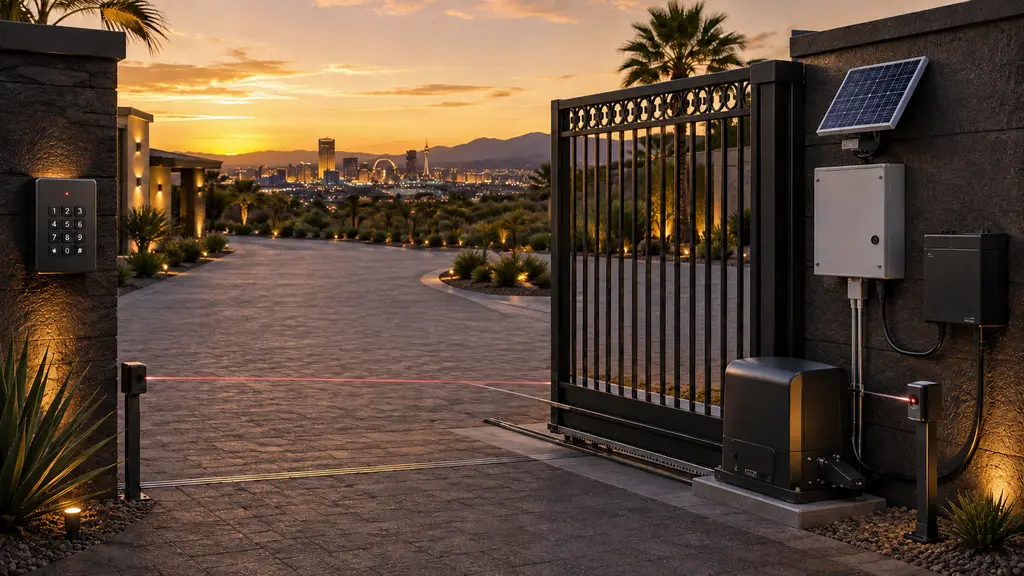
Automatic gates use a motor to open and close, so you do not have to move them by hand. You can control the gate with a remote, keypad, card reader, phone, or vehicle sensor. The control board receives the request and tells the opener to move the gate.
Safety sensors help detect people, vehicles, or objects in its path. The right system depends on the gate’s size, weight, location, and daily use. In this guide, Vegas Valley Ironworks explains how automatic gates work, the main types, their benefits, and what the installation process includes.
Table of Contents
ToggleWhat Is Gate Automation and How Does It Work?
Gate automation uses electric power to open and close a gate. It can be added to some existing gates or included with a new gate system. The process starts when someone requests access. They may use a remote, keypad, card reader, telephone entry system, or phone.
The access device sends a signal to the control board, which tells the gate opener to move. The opener may use an electromechanical motor or hydraulic actuators to open and close the gate. If the power goes out, a battery backup can keep the gate working for a limited time. Solar panels can also charge the battery and power the system.
Where Are Automated Gates Normally Used?
Homes and businesses use automatic gates to control entry and exit. These gates can improve privacy, make access easier, and help manage vehicle traffic. They are often used at:
- Homes and private driveways
- Apartment buildings
- Gated communities
- Stores and office buildings
- Industrial sites
- Storage facilities
- Parking lots and garages
- Private roads
Types of Automatic Gates
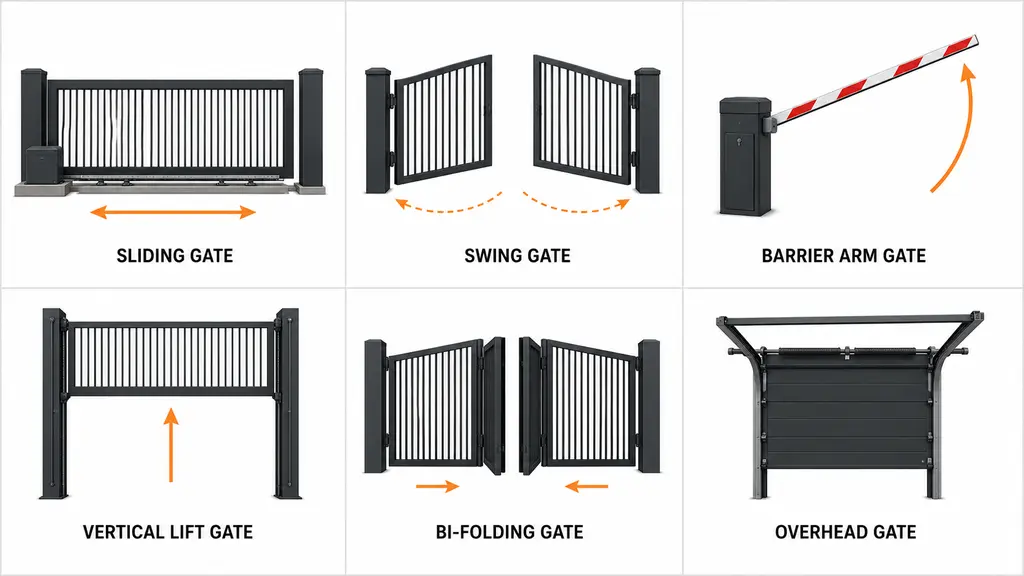
Automatic gates come in different styles. Each type moves differently and needs a certain amount of space.
| Gate Type | How It Works and Space Needed | Common Use |
| Sliding Gate | Moves sideways and needs clear space beside the entrance | Driveways and commercial entrances |
| Swing Gate | Opens on hinges and needs clear space in front of or behind it | Homes and private roads |
| Barrier Arm Gate | Raises a horizontal arm and needs little ground space | Parking lots and garages |
| Vertical Lift Gate | Lifts straight up and needs enough overhead space | Industrial properties |
| Bi-Folding Gate | Folds into smaller sections and needs less space than a swing gate | Small or busy entrances |
| Overhead Gate | Moves upward along a track and needs a strong overhead structure | Parking garages and buildings |
What Are the Benefits of Gate Automation?
Convenience is one of the main benefits of gate automation. Drivers can enter or leave without getting out of their vehicles to move a heavy gate by hand. This can be especially helpful at night or during bad weather.
An automated gate also provides more control over who can enter a property. Access can be managed through remotes, keypads, cards, telephone entry systems, or mobile controls.
Other possible benefits include:
- Easier entry and exit
- More privacy
- Better vehicle traffic control
- Remote gate operation
- Different access options for users
- Less need to move a heavy gate by hand
- A more defined property entrance
- Improved curb appeal
An automatic gate can support property security, but it cannot prevent every unauthorized entry. Some properties may need cameras, lighting, fencing, alarms, or other security measures as well. The system also needs regular care. Tracks, hinges, wheels, openers, sensors, and controls may need inspection or maintenance to keep the gate working correctly.
How to Install Automatic Gates
Automatic gate installation needs careful planning and the right equipment. A professional checks the property and makes sure every part works together. Here are the main steps:
- A professional checks the entrance, ground, and available space.
- They measure the opening and choose the right gate and opener.
- The installer prepares the posts, tracks, or concrete base.
- They install the gate, motor, control board, and power supply.
- They connect the access controls and safety sensors.
- The installer programs and tests the complete system.
Final Thoughts
Knowing how automatic gates work can help you choose the right system for your property. A motor moves the gate, controls manage access, and safety sensors detect obstacles. The best option depends on the entrance size, available space, and daily traffic.
Vegas Valley Ironworks can inspect your property and help you choose the right gate automation system. Our skilled team provides dependable solutions designed for your space and needs. Contact us today to request a free estimate.
FAQs
Are automated gates safe?
Automated gates can be safe when installed correctly. Proper systems use safety devices such as photo eyes, vehicle detectors, warning signs, monitored protection devices, and manual release features.
How much does gate automation cost?
The cost depends on the gate’s type, size, weight, opener, power access, safety devices, access controls, site conditions, and installation work. A property inspection is needed for an accurate quote.
Are automatic gates complex?
Automatic gates have several connected parts, but everyday use is usually simple. Most users operate the gate with a remote, keypad, card, telephone system, or phone.
How do automatic gate sensors work?
Automatic gate sensors use photocells, also called photo-eyes, to detect objects in the gate’s path. If an object stops the infrared beam, the gate stops or reverses to prevent a collision.
How does the gate opener work?
The opener receives a command from the control board. Its motor then uses mechanical parts to move the gate into the open or closed position.