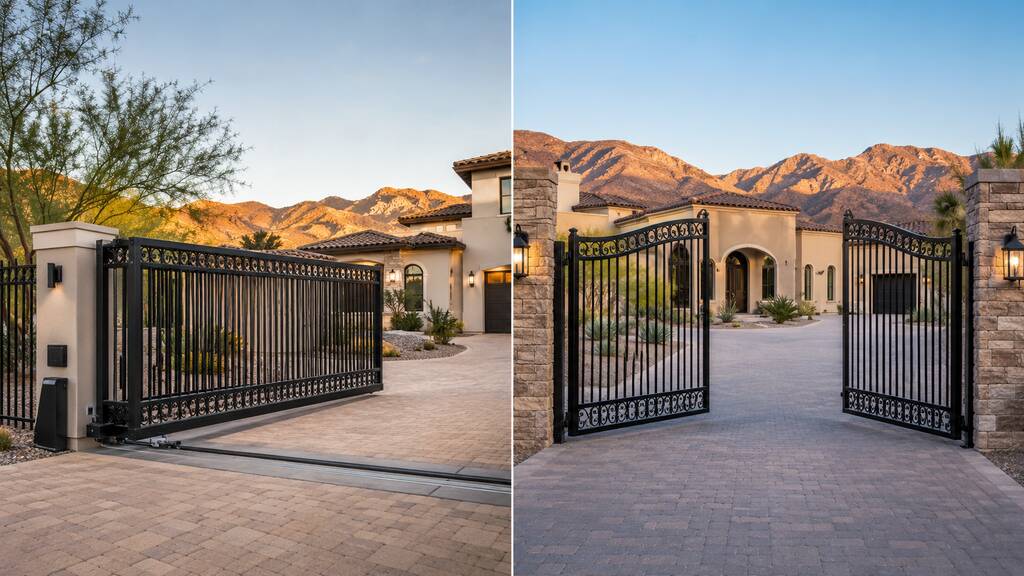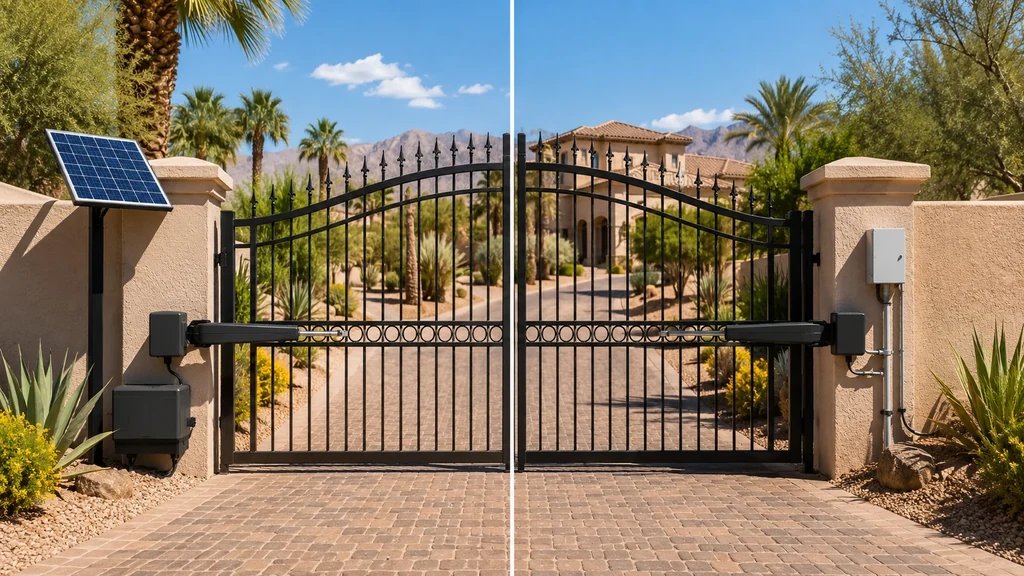

Sliding gates can make a property safer and help control who can enter. However, a gate may cause injuries if it is not installed correctly or checked regularly. A moving gate could trap someone, hit a vehicle, or come off its track. In this guide, Vegas Valley Ironworks explains key sliding gate safety requirements, such as safety sensors, protective screening, roller covers, warning signs, and safe controls.
Why Sliding Gate Safety Matters
Sliding gates are large and heavy. Automatic gates also use a motor, so they can move with strong force.
An unsafe gate may cause several problems:
- A person can become trapped between the gate and a wall, post, or fence.
- Exposed rollers can catch fingers, clothing, or hair.
- A child may reach through the gate while it is moving.
- The gate may fall or leave its track.
- The gate may hit a person, pet, or vehicle.
- Damaged wiring may cause an electrical hazard.
Regular inspections can find loose, worn, or broken parts before they create a serious risk.
What Are the Main Sliding Gate Safety Requirements?
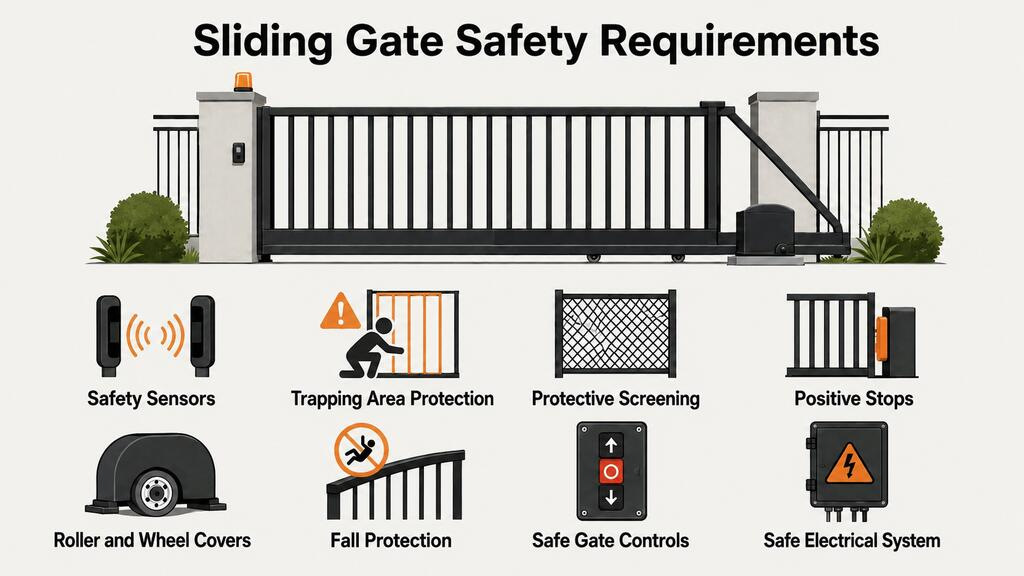
The exact requirements depend on the gate, property, and local codes. However, most safe sliding gates need the following features.
Safety sensors
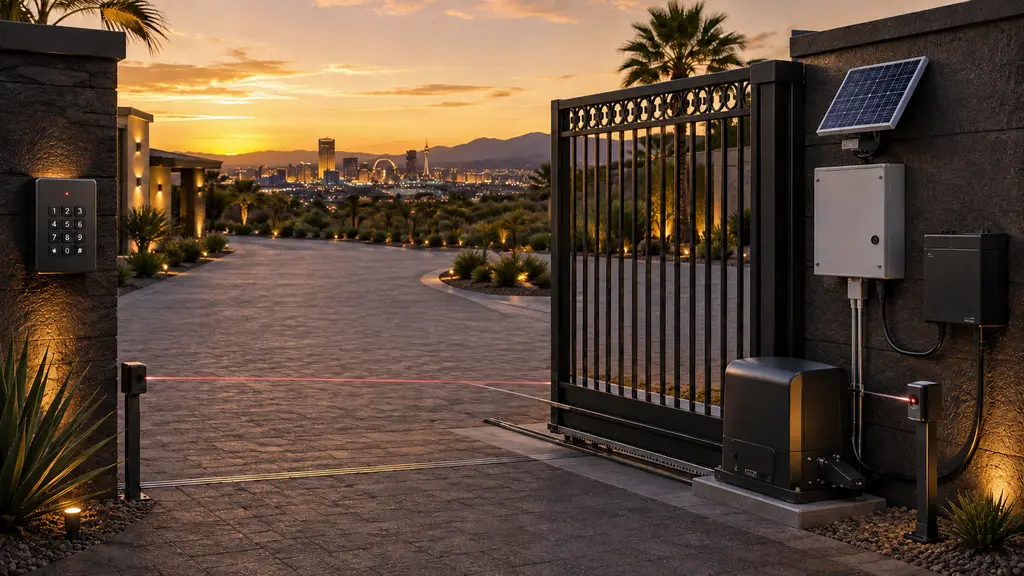
Automatic gates use safety sensors to detect people, vehicles, or objects in their path. Photo eyes send an invisible beam across the gate area. When something blocks this beam, the sensor tells the gate to stop or move back.
Contact edge sensors work in a similar way. When these strips touch an object, they also tell the gate to stop or reverse.
Protection for trapping areas
A trapping area is a space where someone could become stuck between the moving gate and a fixed object. Each trapping area needs proper protection. One sensor may not cover every dangerous area.
Protective screening
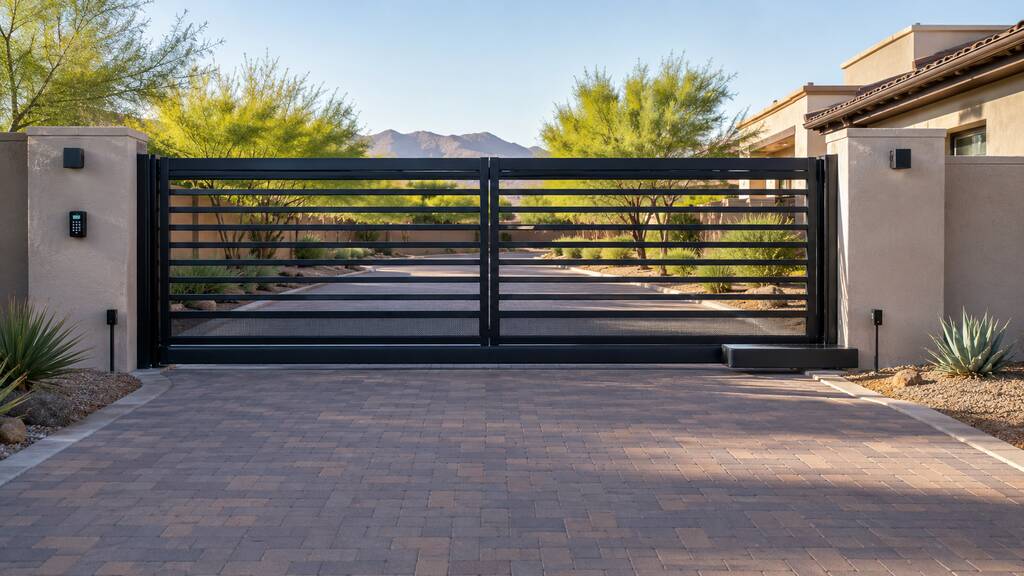
Mesh may cover the open spaces in a sliding gate. This stops people from putting their hands or arms through the gate while it moves. The fence next to the gate may also need mesh because the gate slides across that area when it opens.
Positive Stops
Positive stops are strong parts that stop a sliding gate at the correct open and closed positions. They prevent the gate from moving too far or coming off its track. Both manual and automatic sliding gates need secure positive stops for safe movement.
Roller and wheel covers
Exposed rollers, wheels, and chains can catch fingers, feet, clothing, or hair. Covers and guards keep people away from these moving parts. Check the covers often to make sure they are secure and not damaged. Replace any missing or broken cover before using the gate again.
Fall protection
A gate should remain standing if a roller or another support part fails. Strong posts, guides, tracks, and support hardware can reduce the risk of the gate falling.
Safe gate controls
Keypads and switches should be far enough from the gate. A person should not be able to touch the moving gate while using a control. Gate controls are generally placed at least six feet away.
Safe electrical system
The motor, wiring, grounding, and electrical conduit must be installed correctly. Outdoor electrical parts must also have protection from weather and vehicle damage.
Manual vs. Automatic Sliding Gate Safety Requirements
Manual and automatic sliding gates have different safety requirements. Both need strong supports, smooth movement, covered parts, and regular checks. However, automatic gates need extra safety features because a motor moves them. The table below shows the main differences.
| Safety Requirement | Manual Sliding Gate | Automatic Sliding Gate |
| Movement | Must stay in place | Must stop or reverse for objects |
| Moving parts | Needs roller and wheel covers | Needs covers and safety sensors |
| Travel control | Needs positive stops | Needs stops and operator limits |
| Trapping areas | Needs pinch-point guards | Needs protection in all trapping areas |
| Inspection | Needs mechanical checks | Needs mechanical and electrical checks |
Understanding UL 325 and ASTM F2200 Gate Standards
UL 325 and ASTM F2200 are two important safety standards for automatic vehicle gates in the United States.
UL 325
UL 325 is a safety standard for automatic gate operators. It focuses on how the motor and safety devices should work to reduce the risk of injury. It covers:
- Safety sensors
- Protection from trapping
- Stop and reverse functions
- Gate controls
- Warning signs
- Operator safety checks
ASTM F2200
ASTM F2200 is a safety standard for the design and installation of automatic gates. It focuses on the gate structure, moving parts, and nearby areas. It covers:
- Protective screening
- Covered rollers
- Safe openings
- Positive stops
- Strong gate supports
- Fall protection
- Separate pedestrian access
These two standards work together. However, local building, electrical, and fire codes may add more rules. Installers must also follow the gate manufacturer’s instructions.
When Should You Call a Professional Gate Installer?
Call a professional if:
- The gate leans, shakes, drags, or leaves its track.
- It does not stop or reverse when something blocks it.
- A photo eye or contact edge does not work.
- A safety device is broken or disconnected.
- Rollers, wheels, or chains are exposed.
- Protective screening is missing or damaged.
- The gate makes grinding or scraping sounds.
- It opens or closes without a command.
- A control is too close to the gate.
- Wires or electrical parts are damaged.
- You want to add a motor to a manual gate.
- The gate has not had a recent safety inspection.
Do not continue using a gate that may be unsafe. A professional can inspect the complete system and recommend the correct repairs.
Final Thoughts
A safe sliding gate needs more than a strong motor. It also needs stable supports, covered rollers, positive stops, proper screening, safe controls, and working sensors. Regular inspections help find problems early.
If you need a new sliding gate or have concerns about an existing system, contact Vegas Valley Ironworks. Our team can help you find a safe gate solution for your Las Vegas property.
FAQs
Does Every Automatic Sliding Gate Need Safety Sensors?
An automatic sliding gate needs proper protection from trapping. This may include photo eyes, contact edge sensors, or approved safety features inside the operator.
Does a Sliding Gate Need Protective Screening?
An automatic sliding gate may need screening to stop people from reaching through dangerous openings. The exact requirements depend on the gate design and local rules.
What Is the Safe Distance for a Gate Control?
A gate control should generally be at least six feet from the gate. A person should not be able to touch the moving gate while using it.
Who Is Responsible for Sliding Gate Safety Compliance?
Manufacturers, installers, property owners, and maintenance providers may share responsibility. Property owners should maintain the gate and stop using it if it becomes unsafe.